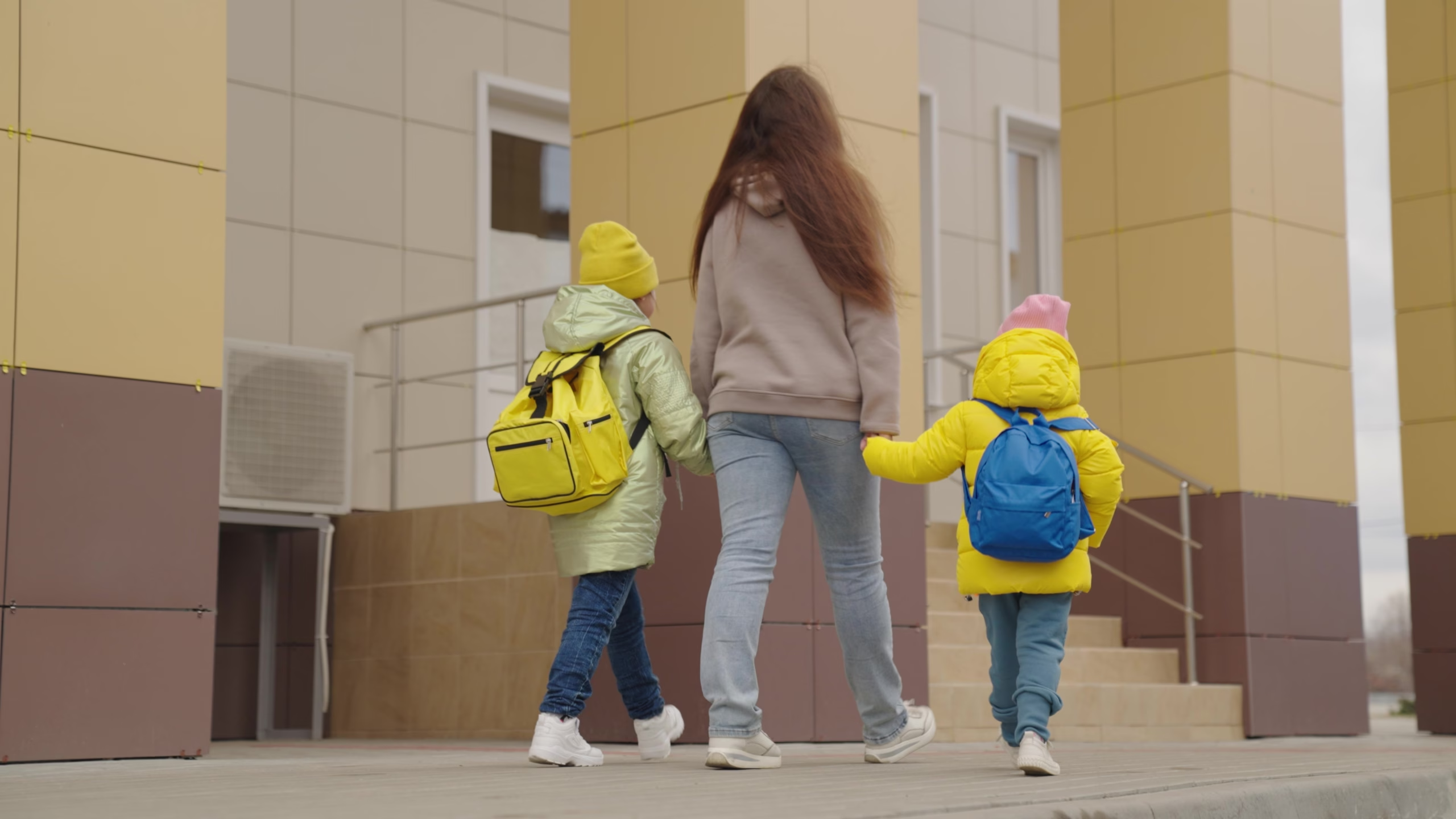

Many people ask themselves why they keep saying yes to people who have caused them pain. They wonder why they open the door when someone shows up uninvited. They wonder why they still allow access to people who once harmed them. They wonder why they let people who hurt them back into their lives, even when their mind knows better. Why We Let People Who Hurt Us Back Into Our Lives is a question many people carry quietly.
This pattern is not stupidity or weakness.
It is emotional conditioning.
It is trauma.
And it begins long before adulthood.
To understand why we let people who hurt us back into our lives, we need to look at the emotional blueprint formed during childhood.
Pin this image to save the story

Why We Repeat This Pattern Again and Again
Childhood emotional conditioning
Children who grow up in homes where love is inconsistent learn to find safety in compliance. If a parent, guardian or relative showed love one moment but hurt the child the next, the child learns to read their behaviour carefully and respond in ways that prevent further harm.
This conditioning becomes the emotional foundation for adult relationships.
It teaches you that peace is created by keeping the other person calm.
It teaches you to forgive too quickly.
It teaches you to tolerate mistreatment to avoid conflict.
And this is why we let people who hurt us back into our lives long after the relationship has damaged us.
Trauma bonding and emotional attachment
Studies in trauma psychology show that when affection and cruelty are mixed together, a bond forms that feels similar to love. The Journal of Traumatic Stress published research proving that many individuals who leave abusive relationships still feel emotionally connected to the abuser months later. The bond is not affection. It is the result of an inconsistent cycle of pain followed by comfort.
This cycle can begin in childhood and continue into adulthood.
It explains why the heart feels pulled toward people who have hurt us.
It explains why the mind understands the harm but the emotions still feel attached. This also explains Why We Let People Who Hurt Us Back Into Our Lives even when we know the danger.
Familiar pain feels safer than unfamiliar peace
When childhood teaches you to survive emotional chaos, healthy relationships can feel strange or even unsafe. Many people unknowingly recreate the emotional environment they grew up in because it feels familiar.
This emotional familiarity is one of the strongest reasons why we let people who hurt us back into our lives.
It is not desire.
It is not love.
It is a repetition of an old survival pattern.
What This Pattern Says About You
It reveals that you are compassionate. You want connection. You hold onto relationships with hope. You believe people can change. You want peace rather than conflict. And you care deeply.
But it also shows that you have been emotionally conditioned to place other people’s comfort above your own.
This is not your fault.
This is the result of what your childhood taught you.
Why Boundaries Feel Uncomfortable
People who grow up without emotional safety often feel guilty or fearful when they try to set boundaries. You might feel pressure to answer calls. You might feel obligated to open the door when someone appears unexpectedly. You might feel the need to explain why you did not respond.
This discomfort does not mean the boundary is wrong.
It simply means your nervous system is adjusting to a new way of being.
A healthier way.
A safer way.
How to Stop Letting People Who Hurt You Back Into Your Life
Healing begins with small changes.
Create quiet internal boundaries
Tell yourself:
I do not have to answer every call
I do not have to open the door
I do not have to explain myself
I have the right to decide who enters my life
These boundaries do not require confrontation.
They simply require consistency.
Separate forgiveness from access
Forgiveness is something you do for your own peace.
Access is something someone must earn.
They are not the same thing.
Respond without emotional energy
When you respond calmly and briefly, you remove the emotional reward that controlling or intrusive people seek. This method reduces their power over you.
Think of the child you once were
Imagine that child standing beside you. Ask yourself if you would allow harmful people to come near her. This question makes your boundaries clear very quickly.
A New Way Forward
Research shows that when trauma patterns are interrupted with consistent self-respect and emotional boundaries, they eventually fade. You are allowed to break the cycle. You are allowed to create a peaceful life. You are allowed to distance yourself from anyone who disrupts your emotional safety.
You are allowed to heal, even if the people who hurt you believe they still deserve access to your life.
A Letter to the Reader Who Has Let Too Many People Back In
Dear gentle soul,
You learned early to keep others comfortable. You learned to pretend you were fine. You learned to forgive quickly so the pain would not get worse. You learned to let people return because you feared conflict more than solitude.
But you deserve more than survival.
You deserve quiet.
You deserve safety.
You deserve a home where your heart can rest.
You can stop letting people who hurt you back into your life.
You can choose peace.
You can choose boundaries.
You can choose yourself.
And choosing yourself is not selfish.
It is healing.